
Concrete vs. Asphalt Driveways in Rosenberg, TX: Which Is Better?
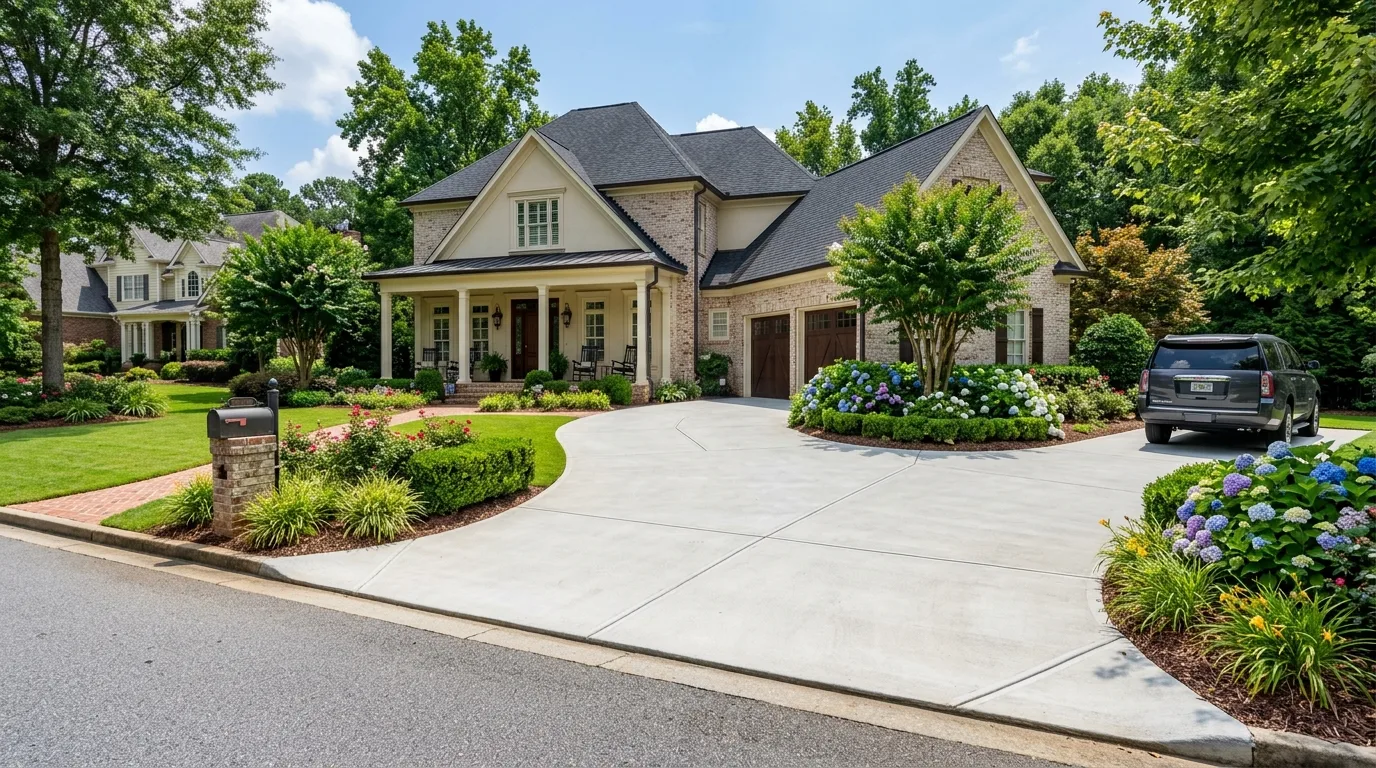
When Rosenberg homeowners need a new driveway, the concrete vs. asphalt decision comes up frequently — especially when asphalt bids come in significantly lower than concrete. Which material actually performs better in Fort Bend County’s specific conditions? The answer matters because both materials behave very differently in Rosenberg’s Houston Black Clay soil and 94°F summer heat. This guide gives you a straightforward comparison based on how each material actually performs in this climate and soil type.
Get a Concrete Driveway Estimate in Rosenberg
Rosenberg Concrete provides detailed written estimates for concrete driveways across Fort Bend County. Call (888) 376-0955.
Why Rosenberg’s Conditions Make This Comparison Different
In most of the country, the concrete vs. asphalt comparison is primarily about upfront cost vs. longevity. In Fort Bend County, two local factors change the analysis significantly:
Houston Black Clay soil. Both asphalt and concrete are affected by clay soil expansion and contraction, but they respond differently. Concrete is a rigid slab that moves as one unit; asphalt is a flexible material that deforms continuously under load and soil pressure. On expansive clay, asphalt’s flexibility becomes a weakness — it ruts, rutted areas collect water, and clay saturation accelerates progressive failure.
Texas summer heat. Rosenberg’s summer averages 94–95°F ambient, and driveway surfaces see temperatures of 130–150°F in direct sun. These temperatures push asphalt past its design softening point, causing rutting under vehicle tires (especially at braking and turning points) and tracking indoors. Concrete does not soften in this temperature range.
Upfront Cost Comparison
Asphalt: $3–$5 per square foot for standard residential driveway installation. A two-car driveway (400 sq ft) runs $1,200–$2,000.
Concrete: $5–$8 per square foot for plain gray concrete. Same driveway runs $2,000–$3,200.
Concrete costs more upfront — typically 30–60% more than asphalt. This is the starting point for most Rosenberg homeowners who are comparing bids.
Long-Term Cost Comparison in Fort Bend County
When you look beyond upfront cost, the comparison shifts:
Asphalt maintenance costs in Rosenberg:
- Sealcoating every 2–3 years: $0.15–$0.25/sq ft = $60–$100 per application
- Crack sealing as needed: $0.50–$2/linear foot
- Potholes and rutting repair after 5–10 years in clay soil: $500–$2,000+
- Full replacement every 15–20 years in Texas conditions
Concrete maintenance costs in Rosenberg:
- Sealing every 3–5 years: $0.15–$0.30/sq ft = $60–$120 per application
- Crack filling as needed: $3–$7/linear foot
- Expected lifespan: 25–40 years with proper base preparation
Over 30 years, the total cost of ownership for concrete — initial installation plus maintenance — typically comes out equal to or lower than asphalt when Rosenberg’s specific conditions are factored in.
Performance in Rosenberg’s Summer Heat
Asphalt in Rosenberg summers: Asphalt softens significantly in temperatures above 120°F — conditions reached at the surface of any black driveway in direct July and August sun in Rosenberg. At this softness, vehicle tires create depressions at points of slow or stopped traffic: at the apron near the street, at braking points, and at parking spots. These depressions collect water, which softens clay beneath and accelerates further rutting and cracking.
Power steering fluid leaks, engine oil drips, and gasoline spills dissolve asphalt binders more aggressively in hot temperatures, creating soft spots that spread under traffic.
Concrete in Rosenberg summers: Concrete does not soften in temperatures within Rosenberg’s range. A properly sealed concrete surface at 140°F stays rigid and functional. Chemical spills are a staining concern rather than a structural one. Summer performance is concrete’s strongest advantage in Fort Bend County’s climate.
Performance in Clay Soil Conditions
Asphalt on Houston Black Clay: Asphalt’s flexibility allows it to deform with clay soil movement rather than cracking as dramatically as rigid concrete. This sounds like an advantage but creates problems: flexible deformation without recovery produces ruts and swells that create drainage problems. Water that ponds in ruts softens clay beneath, accelerating the progression. Within 10–15 years on Houston Black Clay without excellent drainage, asphalt driveways in Rosenberg often require significant remediation.
Concrete on Houston Black Clay: Concrete’s rigidity is a double-edged quality. It doesn’t rut or deform gradually, but it does crack when soil movement creates sufficient stress at the wrong location. Proper control joints direct this cracking to planned locations, and proper base preparation reduces soil movement amplitude. Well-engineered concrete on Houston Black Clay consistently outperforms asphalt over 20+ years in Fort Bend County.
HOA Considerations in Rosenberg
Some Rosenberg HOA communities specify driveway materials. Bonbrook Plantation, Brookewater, and similar master-planned communities often prefer or require concrete for aesthetic consistency. If your property is in an HOA, verify the permitted driveway materials before comparing bids on alternative materials.
When Asphalt Makes Sense in Rosenberg
Asphalt has genuine advantages in specific situations:
- Budget constraints: If the upfront cost difference is prohibitive, asphalt with excellent maintenance is a reasonable choice.
- Shaded driveways: Asphalt in heavy shade (oak tree canopy) doesn’t reach the extreme surface temperatures that cause softening and rutting.
- Very long driveways: On acreage properties where driveway lengths exceed 100–200 feet, the per-foot cost savings of asphalt becomes significant at scale.
Frequently Asked Questions
Is concrete or asphalt better for a driveway in Rosenberg, TX?
For most Rosenberg homeowners, concrete is the better long-term choice. Fort Bend County’s Houston Black Clay soil and 94°F summer heat both favor concrete over asphalt — concrete doesn’t soften in Texas heat, and rigid slab behavior on clay soil produces fewer progressive failures than asphalt’s flexible deformation. The upfront cost premium for concrete is typically recovered through lower lifetime maintenance costs over 25–30 years.
How much more does concrete cost than asphalt in Rosenberg?
Plain concrete driveways in Rosenberg run $5–$8/sq ft; asphalt runs $3–$5/sq ft. The upfront premium for concrete is typically 30–60%. A standard two-car driveway (400 sq ft) costs approximately $800–$1,200 more in concrete than asphalt. Over a 30-year comparison including maintenance, the lifecycle cost difference shrinks or reverses in Fort Bend County’s demanding conditions.
Does asphalt crack less than concrete in clay soil?
Asphalt doesn’t crack less — it deforms differently. Asphalt on Fort Bend County’s expansive clay ruts and swells rather than fracturing. These deformations create drainage problems that accelerate clay erosion beneath the pavement, leading to progressive failure. Concrete cracks at control joints (planned) or at random locations (engineering failure), but doesn’t rut. Both materials require proper base preparation and drainage design in Rosenberg — neither performs well on native clay without it.
Build a Concrete Driveway That Lasts in Rosenberg
Call Rosenberg Concrete at (888) 376-0955 for a detailed, written estimate for your Fort Bend County driveway project.
Related: