
Concrete Driveway Maintenance Tips for Texas Weather
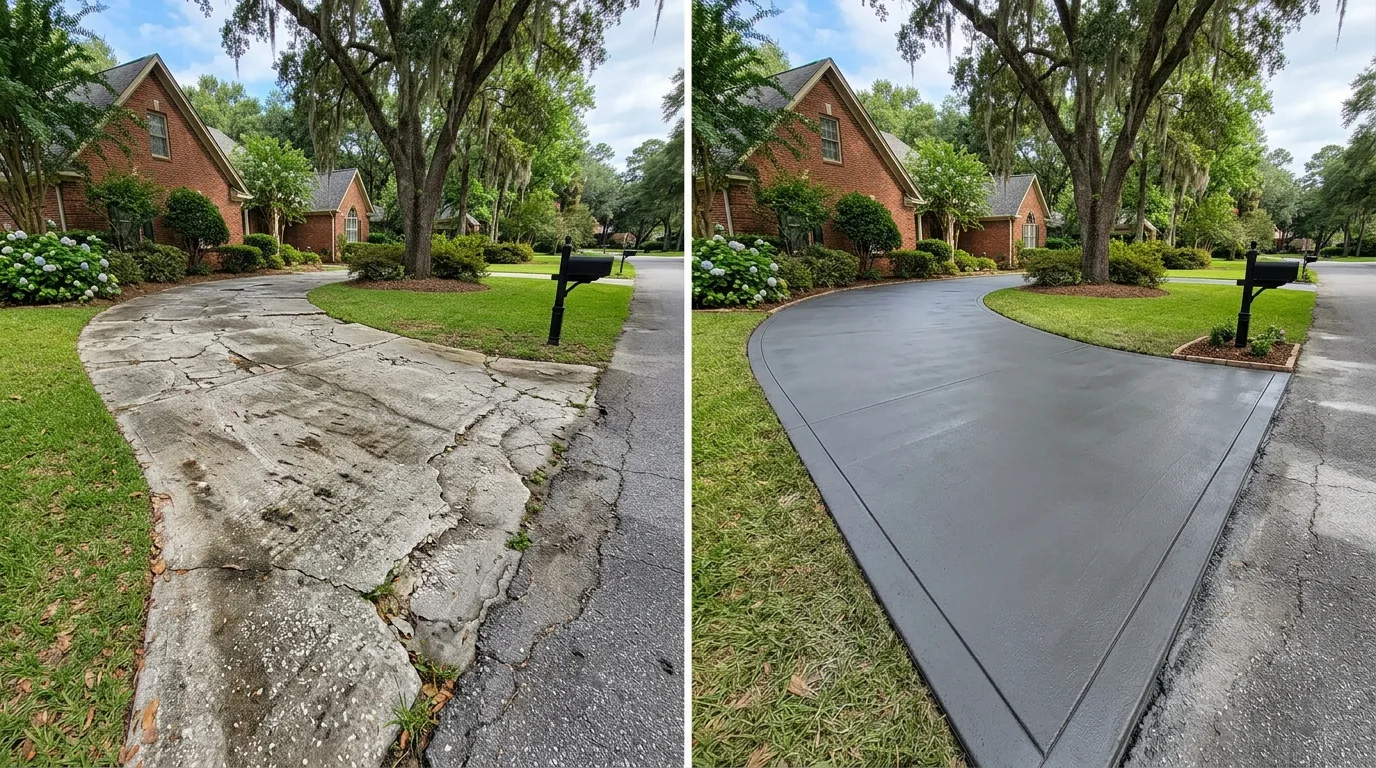
A concrete driveway built in Rosenberg is a 25–40 year investment — but only if it gets the maintenance that Texas weather demands. Houston Black Clay soil, 94°F summer heat, 52 inches of annual rainfall, and intense UV radiation create conditions that accelerate concrete deterioration faster than in most U.S. climates. The good news: proper maintenance is straightforward and not expensive. Ignoring it is what’s costly.
This guide covers the essential maintenance steps for Rosenberg and Fort Bend County homeowners to protect their concrete driveways through every season of the Texas year.
Rosenberg Concrete Driveway Maintenance Help
Rosenberg Concrete handles sealing, crack repair, and resurfacing for Fort Bend County driveways. Call (888) 376-0955.
Why Texas Weather Is Hard on Concrete Driveways
Heat and UV exposure. Rosenberg’s summers deliver intense solar radiation from June through September, with concrete surface temperatures exceeding 130°F on sunny days. UV breaks down the cement paste at the surface, causing slow scaling and opening micro-pores that allow water infiltration. Without sealer protection, this process visibly degrades a driveway surface within 5–7 years.
Clay soil movement. Houston Black Clay beneath Rosenberg driveways expands every wet season and contracts every dry season. This annual movement generates stress at driveway joints and edges. Control joints — the saw cuts that divide driveways into panels — are designed to accommodate this movement, but when they fill with debris or when the adjacent clay dries into a hard ridge, they can’t flex properly and stress transfers into the slab, widening cracks.
Heavy rainfall. The 5+ inches of monthly rainfall Rosenberg receives in May, June, August, and September creates drainage stress at driveway edges. Water that flows under the driveway edge softens the clay beneath, accelerating settlement and edge cracking.
Annual Maintenance Calendar for Rosenberg Driveways
Spring (March–April): Seal and Inspect
Spring is the best time to reseal your Rosenberg concrete driveway. Sealing in March or April protects the surface through the UV-intense summer months before they arrive rather than after damage has accumulated.
Inspection checklist:
- Walk every crack — note length, width, and whether any have grown since fall
- Check joints for debris accumulation (leaves, dirt, grass roots)
- Look for surface spalling or flaking along driveway edges
- Check drainage slope: does water flow away from the house after rain?
If the surface is in good condition: Apply a penetrating siloxane sealer (for basic protection) or a film-forming acrylic sealer (for appearance enhancement with color enhancement). Solvent-based acrylic sealers perform better than water-based in Texas sun conditions.
If the surface has small cracks: Fill them before sealing. Flexible polyurethane crack filler works better than rigid cementitious patching for cracks on clay soil where movement continues.
Summer (June–September): Monitor and Manage
Summer is not maintenance season — it’s monitoring season. Avoid major concrete work on your own driveway in summer heat. What you should do:
Keep joints clear. Summer is when grass and weeds aggressively fill control joints. Remove plant growth before root systems can mechanically widen joint gaps.
Address oil stains promptly. Vehicle oil and power steering fluid stains penetrate unsealed concrete quickly in summer heat. Apply a concrete degreaser within 24–48 hours of spills before the oil sets into the surface pores.
Avoid using a pressure washer on hot concrete. Pressure washing freshly heated concrete (surface above 120°F) can open micro-pores and force water deep into the slab. Morning power washing when the surface has cooled is safer.
Fall (October–November): Crack Repair and Joint Cleaning
Fall — specifically October and November — is the second-best maintenance window in Rosenberg. Mild temperatures allow repair products to cure properly, and the end of the rainy season means joints are more accessible for cleaning.
Clean control joints: Use a flathead screwdriver or compressed air to clear joints of debris before they’re sealed for winter. Sealed joints that can’t flex put stress on adjacent concrete.
Fill cracks: Any cracks that appeared or grew during the wet season should be filled before winter. While Rosenberg rarely freezes, even mild temperature drops cause concrete expansion and contraction that widen unfilled cracks over the winter.
Reseal if needed: If the sealer is more than 3 years old or shows visible wear (water no longer beads, surface looks dull), fall resealing gives good results before the weather turns cold.
Winter (December–February): Minimal Intervention
Rosenberg winters are mild and don’t present the freeze-thaw damage that affects northern concrete. The main winter care items:
Avoid deicers. Though rare, if Rosenberg gets an ice event, never apply rock salt or potassium chloride deicers to concrete driveways. These chemicals react with concrete surface compounds and accelerate scaling. Sand provides traction without chemical damage.
Clear standing water. If water pools on the driveway edge after rain, address drainage before the wet season returns. Chronic puddling at driveway edges accelerates clay softening beneath the slab.
Practical Uses: How to Address Common Driveway Problems
- Hairline cracks (under 1/8 inch): Apply penetrating concrete crack sealer to prevent water infiltration. These cracks won’t widen significantly if sealed before they admit water.
- Working cracks (1/8 to 1/2 inch): Fill with flexible polyurethane joint filler rated for concrete crack repair. Rigid patching compounds will crack again as the clay soil moves.
- Spalling surface: Clean, prime, and apply a polymer-modified concrete resurfacer. For widespread spalling, full resurfacing by a professional is more effective than spot repairs.
- Edge cracking or settlement: Call a professional. Edge cracks that extend into the slab base may indicate drainage failure beneath the slab — a condition that surface repair won’t solve.
How Often to Reseal a Rosenberg Concrete Driveway
Penetrating siloxane sealers: Every 5–7 years for maintenance of moisture resistance. Less visible enhancement than film-forming sealers.
Acrylic film-forming sealers: Every 2–3 years in Rosenberg’s UV conditions. These sealers show visible wear (dull appearance, whitening in traffic areas) that signals recoating time.
The telling test: pour a cup of water on your driveway. If it beads, the sealer is working. If it absorbs immediately, the surface needs resealing.
Frequently Asked Questions
How often should I seal a concrete driveway in Rosenberg, TX?
Film-forming acrylic sealers need reapplication every 2–3 years in Rosenberg’s intense UV and heat conditions. Penetrating siloxane sealers last 5–7 years but don’t enhance appearance. Signs that resealing is needed: water doesn’t bead, surface appears dull or shows staining, or oil spots penetrate quickly. Spring (March–April) is the best time to reseal — protection is applied before summer UV arrives.
What causes concrete driveways to crack in Rosenberg?
Houston Black Clay soil expansion and contraction is the primary cause — the soil movement stresses concrete slabs from below. Drainage failure (water collecting beneath slab edges) is the second major cause. Control joints that are damaged or filled with debris can’t absorb movement, transferring stress into the slab. See our guide on preventing concrete cracking in Fort Bend County.
Should I use asphalt or concrete for a driveway in Rosenberg?
For Fort Bend County’s clay soil and Texas heat, concrete generally performs better than asphalt. Asphalt softens significantly in Rosenberg’s summer heat (94–95°F surface temperatures soften asphalt), and clay soil movement affects both materials equally. Read our full comparison: concrete vs. asphalt driveways in Rosenberg.
Expert Driveway Maintenance in Rosenberg
Rosenberg Concrete handles sealing, crack repair, and resurfacing across Fort Bend County. Call (888) 376-0955 for a free assessment.
Related: