
Top Concrete Trends for Rosenberg Homes in 2026
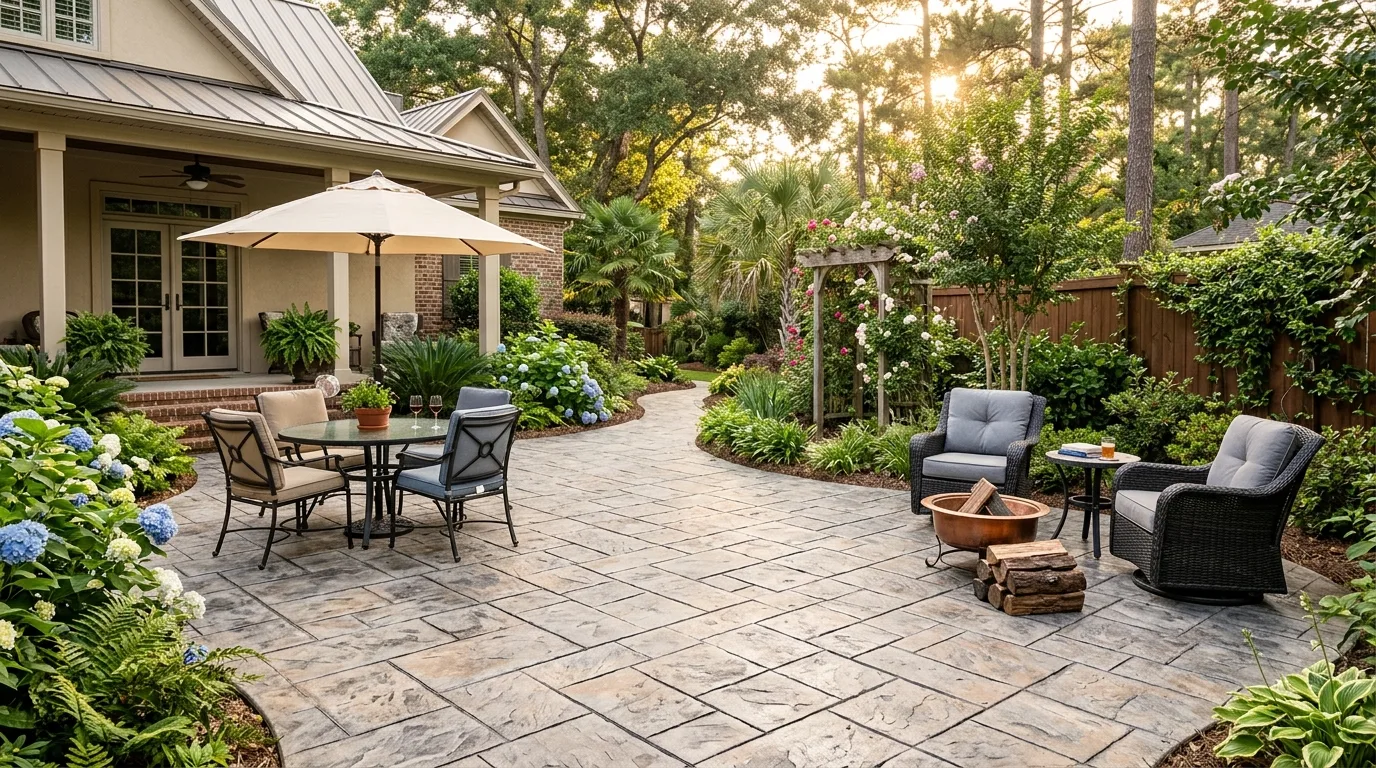
Outdoor living spaces in Rosenberg have evolved significantly over the past few years — and 2026 concrete trends reflect that shift. Fort Bend County homeowners are moving beyond plain gray slabs toward finishes, patterns, and applications that complement modern Texas home design, hold up to our climate, and satisfy HOA aesthetic guidelines in communities like Bonbrook Plantation and Brookewater. Here’s what’s leading the market this year.
Bring These Trends to Your Rosenberg Property
Rosenberg Concrete offers the latest decorative concrete options for Fort Bend County homes. Call (888) 376-0955 for a free design consultation.
Why 2026 Is a Strong Year for Decorative Concrete in Rosenberg
Several factors are converging in Fort Bend County’s housing market to drive demand for upgraded concrete:
Home equity is being deployed. Rosenberg area property values increased significantly over the past several years. Homeowners with equity are investing in outdoor improvements that add visual and functional value.
Outdoor living space demand. Texas outdoor culture — combined with the expansion of covered patio construction in neighborhoods near Seabourne Creek Nature Park and the Brazos River corridor — is driving demand for concrete surfaces that complement rather than just support outdoor living areas.
Paver alternatives. Homeowners who installed pavers 10–15 years ago are finding that individual units shift and separate on Fort Bend County’s Houston Black Clay. Replacement with monolithic stamped concrete is a growing trend that solves the stability problem while maintaining or improving aesthetics.
Trend #1: Earth Tone Stamped Concrete
The dominant color palette for Rosenberg stamped concrete in 2026 is earthy: tan, charcoal, sandstone, warm gray, and brown tones that complement the brick and stone exteriors common throughout Fort Bend County neighborhoods. Cool grays that dominated in previous years are giving way to warmer, more textured finishes.
Popular patterns: Ashlar slate, large-format flagstone, and irregular fieldstone patterns in tan/charcoal color combinations account for the majority of Rosenberg decorative patio requests. These patterns photograph well, satisfy most HOA design guidelines, and coordinate with both traditional and contemporary home styles.
Why it works in Rosenberg: Neutral earth tones are less likely to show the color migration that Rosenberg’s intense UV causes in boldly colored concrete. Warm tones also stay more comfortable underfoot in direct sun than darker surfaces that absorb and radiate more heat.
Trend #2: Exposed Aggregate Pool Decks
The exposed aggregate finish — where surface paste is washed away before final set to reveal the stone aggregate beneath — is the leading pool deck choice in Rosenberg in 2026. It replaces both plain gray concrete and older brushed finishes as the default option for pool surrounds in upscale Rosenberg neighborhoods.
Why homeowners choose it: Exposed aggregate provides natural slip resistance from aggregate texture, stays cooler underfoot than smooth concrete (the aggregate reflects more heat), and hides minor surface wear better than smooth finishes. It doesn’t require stamping skill or the tight timing window that stamped concrete demands in summer heat.
Popular aggregate colors: River rock aggregates in cream, tan, and mixed earth tones are most popular. Colored glass aggregate is a premium option for upscale pools in Fort Bend County’s higher-end neighborhoods.
Trend #3: Broom-Finish Driveways with Decorative Borders
Plain broom-finish concrete driveways aren’t going away — but homeowners are increasingly adding decorative borders (brick pattern, cobblestone, or stamped border strips) around plain field sections to create visual interest without the cost of full stamping.
The formula: A standard broom-finish driveway field ($5–$8/sq ft) surrounded by a 12–18” stamped or exposed aggregate border ($10–$14/sq ft for the border section) creates a high-impact look at a fraction of the cost of full decorative concrete. This approach is practical in neighborhoods like Briarwood Crossing where HOA guidelines limit color but don’t restrict texture.
Trend #4: Concrete Walkways as Design Elements
Concrete walkways connecting driveways to entries, side gates, and backyard access points are becoming intentional design features rather than afterthoughts in Rosenberg. Homeowners are investing in curved walkways, stepping stone layouts with concrete fills, and walkways that coordinate with patio finishes.
Popular in 2026: Curved walkways with exposed aggregate surfaces connecting entry to driveway, matching the patio material for design continuity. This creates a cohesive outdoor floor plan that real estate agents note as a selling point in Fort Bend County’s active resale market.
Trend #5: Concrete Resurfacing as Budget Alternative
Not everyone is starting from scratch. Concrete resurfacing — applying a bonded overlay to existing slabs in sound structural condition — is a growing trend for Rosenberg homeowners who want an updated look without the cost of full replacement.
How it works: A polymer-modified concrete overlay (typically 1/4 to 3/8 inch thick) is applied over the cleaned and prepared existing slab, then stamped, stained, or textured. For existing driveways and patios in Fort Bend County where the sub-base and structure are sound but the surface has aged, resurfacing at $3–$6/sq ft delivers dramatically improved aesthetics compared to full replacement at $8–$21/sq ft for decorative options.
Practical Uses: Choosing the Right Trend for Your Rosenberg Home
- HOA-governed community: Verify permitted patterns and colors before committing. Earth tone stamped patterns are widely accepted; bold colors and non-standard patterns sometimes require ARB approval.
- Established older driveway: Evaluate whether the sub-base is sound (no heaving, no drainage failure) before investing in resurfacing rather than replacement.
- New construction patio: Spring timing is strongly recommended for decorative work to allow stamping to proceed at the right pace.
- Pool deck replacement: Exposed aggregate is the most practical choice for Rosenberg’s combination of barefoot comfort requirements and clay soil conditions.
- Budget-conscious upgrade: Decorative border + plain field is the highest-value aesthetic upgrade per dollar spent in the current Rosenberg market.
Frequently Asked Questions
What’s the most popular concrete patio finish in Rosenberg right now?
Stamped concrete in earth tone ashlar slate or large-format flagstone patterns is the leading choice for Rosenberg patios in 2026. Exposed aggregate is the leading choice for pool surrounds. Both finishes are compatible with Fort Bend County’s Houston Black Clay soil conditions when properly engineered and drained.
Are concrete trends different in Rosenberg than in Houston?
The core trends are similar — both markets favor earth tones and natural stone patterns — but Rosenberg-area projects have stronger constraints from HOA design guidelines in communities like Bonbrook Plantation and Kingdom Heights. These guidelines push projects toward neutral earth tones and pattern styles that the broader neighborhood accepts, more so than in non-HOA Houston neighborhoods.
What’s the most durable decorative concrete option for Rosenberg’s clay soil?
Exposed aggregate is the most durable surface finish because it’s integral to the concrete — the aggregate can’t fade, chip, or delaminate the way surface-applied color can. For full-surface decorative work, stamped concrete with penetrating sealer and proper base engineering is durable for 20–30 years. For more, see our guide on stamped concrete patios in Rosenberg.
Bring 2026 Concrete Trends to Your Rosenberg Home
Call Rosenberg Concrete at (888) 376-0955 for a free design consultation. We serve all of Fort Bend County.
Related: