
Best Time to Pour Concrete in Fort Bend County, TX
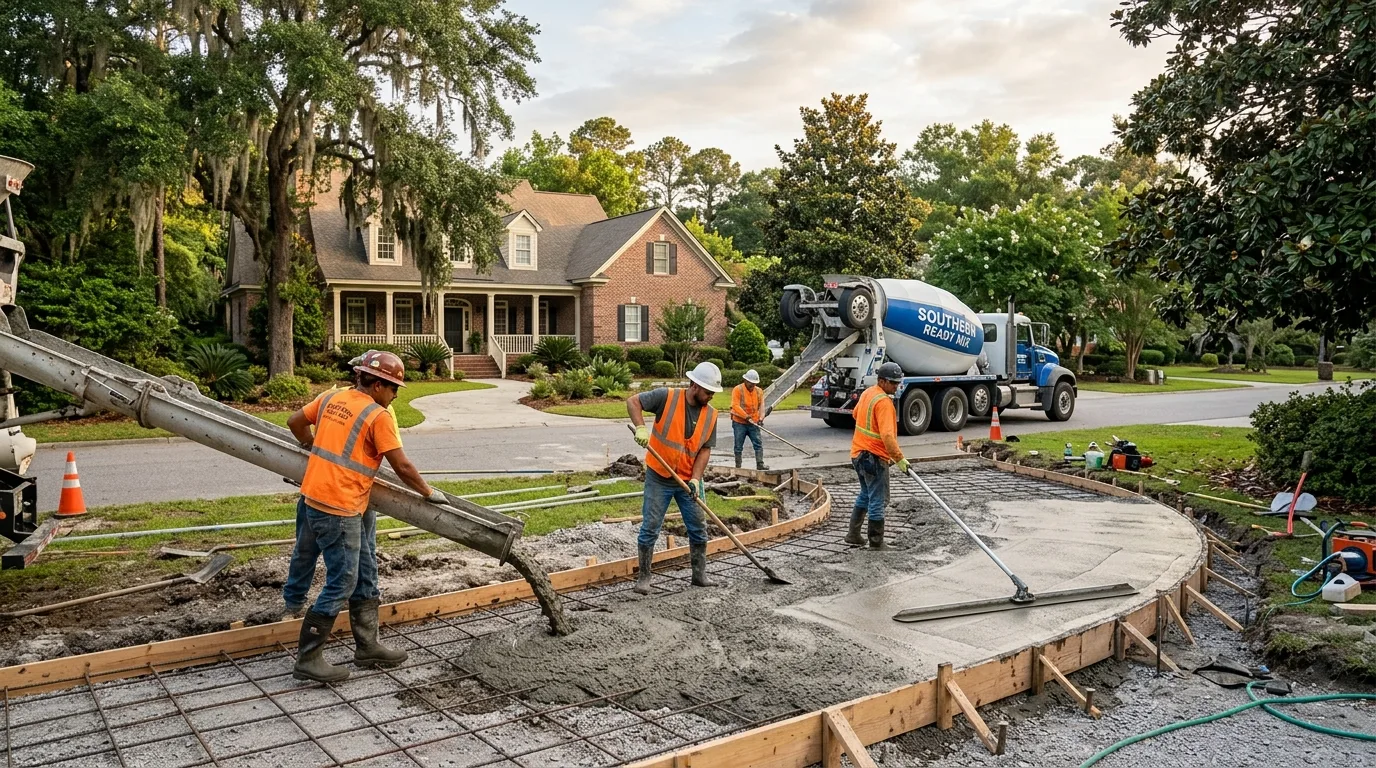
Timing a concrete pour in Fort Bend County isn’t just about avoiding rain — it’s about giving your slab the best possible curing conditions so it develops full strength without surface cracking, color issues, or premature joint failure. Rosenberg’s humid subtropical climate creates a narrow window of truly ideal conditions, and knowing when that window opens and closes saves money and frustration.
In this post, we cover the optimal seasons for concrete pours in Rosenberg and Fort Bend County, what each season does to concrete during curing, and practical scheduling advice for homeowners planning driveways, patios, foundations, and repairs.
Schedule Your Rosenberg Concrete Project
Rosenberg Concrete helps you pick the right timing for your pour. Call (888) 376-0955 for a free estimate.
Why Timing Matters for Concrete in Rosenberg
Concrete gains strength through a chemical process called hydration — water reacting with cement compounds to form interlocking crystals that give concrete its strength. This process is temperature-sensitive: too cold and it slows or stops; too hot and it accelerates unevenly, causing surface moisture to evaporate before the interior has cured, creating surface cracking and weakened concrete throughout.
Rosenberg’s climate presents both extremes across the year. The humid subtropical classification (Köppen Cfa) means hot, wet summers and mild winters — but neither extreme rules out concrete work entirely. Understanding what each season does to concrete helps you plan the project timing that best matches your budget and quality goals.
Spring (March–May): The Best Window
Spring is the optimal time for concrete pours in Rosenberg and across Fort Bend County. Daytime temperatures range from 65–86°F, with overnight lows staying above 45°F. This temperature range allows concrete to cure slowly and evenly throughout the full slab depth — a process called proper hydration that produces stronger, less crack-prone concrete than fast curing does.
Relative humidity in spring remains moderate, reducing the surface evaporation rate that causes plastic shrinkage cracking in freshly poured concrete. Rainfall in March and April averages 2.5–3.5 inches per month — enough that scheduling flexibility is needed but not so frequent that it derails most projects.
Practical advantage: Spring bookings fill early for Rosenberg concrete contractors. Schedule your spring project in January or February for the best availability in March–April.
Fall (October–November): The Second-Best Window
Fall is nearly as good as spring for concrete pours in Rosenberg. October temperatures range 60–82°F; November drops to 50–73°F. These conditions produce excellent curing outcomes for slabs, and contractor scheduling is often more flexible in fall than in the busy spring season.
October has 4.4 inches of average rainfall — the tail end of the rainy season — which requires monitoring for scheduling conflicts. November drops to 2.8 inches and is typically the more reliably dry scheduling window. For stamped concrete patios and decorative driveways, where the stamping window requires precise timing, fall conditions are more forgiving than spring’s warmer afternoons.
Practical advantage: Fall projects sometimes offer better contractor availability and competitive pricing than the busy spring season in Fort Bend County.
Summer (June–September): Workable but Challenging
Summer is the most difficult season for concrete pours in Rosenberg, but it’s not impossible. Experienced contractors work around the heat through early morning pours — starting at 5–6 AM before temperatures climb — and aggressive curing measures including wet burlap, curing compounds, and fogging systems that maintain surface moisture during the critical first hours.
The challenges are real: daytime highs averaging 94–95°F in July and August cause surface moisture to evaporate faster than the interior cures, creating the surface checking and plastic shrinkage cracking that homeowners sometimes see on summer concrete. Dew points of 68–74°F make conditions feel more oppressive than the air temperature alone suggests, and afternoon thunderstorms can interrupt pours with little warning.
Rainy season note: May–June and September–October receive the highest precipitation in Rosenberg — 5.0–5.2 inches per month on average. These months require scheduling flexibility and close weather monitoring. The summer rainy season can delay pours by days at a time when conditions are consistently wet.
What good contractors do in summer: Pour before 8 AM, use sun shades over the work area, apply evaporation retarder chemical to freshly screeded concrete, mist the surface during finishing, cure immediately after final finishing with wet burlap or curing blankets, and protect the surface for 7+ days.
Winter (December–February): Mild but Slower
Rosenberg’s winters are mild by national standards — January averages 43–62°F, and hard freezes are rare but not impossible. Concrete pours are workable through most of the winter, with curing proceeding more slowly than spring or fall but within acceptable parameters as long as temperatures stay above 40°F.
The main risk is an unexpected cold snap. If a significant overnight freeze is forecast within 24 hours of a pour, concrete must be protected with insulating blankets to prevent freeze damage in the critical early curing period. Most Rosenberg winters pass without this problem, but January and February can produce occasional cold front drops to 28–32°F.
Practical advantage for winter: Contractor availability is typically highest in winter, and scheduling is more flexible. For homeowners with non-urgent projects and flexible timelines, January–February sometimes offers the fastest start-to-finish scheduling with no wait lists.
How Different Project Types Are Affected by Season
Driveways: All seasons workable. Spring and fall preferred for quality. Summer requires early-morning scheduling.
Concrete patios: Spring strongly preferred because afternoon curing conditions matter for decorative finishes and surface quality.
Stamped concrete: Spring is the best season. Summer stamping requires significant contractor skill — the window between pourable and too-set is very short in heat.
Foundations: Spring and fall preferred for large-volume pours where thermal management across the slab depth matters.
Concrete repair: Surface repairs can be done year-round, but major resurfacing benefits from mild, dry conditions in October–November or March–April.
Frequently Asked Questions
When is the best time to pour concrete in Rosenberg, TX?
Spring (March–May) is the best time for concrete pours in Rosenberg. Temperatures of 65–86°F produce ideal curing conditions, rainfall is moderate, and the mild conditions allow concrete to develop full strength without rapid surface evaporation. Fall (October–November) is the second-best window. See our guide on concrete driveway costs in Rosenberg for project planning information.
Can you pour concrete in Rosenberg summer heat?
Yes, with proper precautions. Early-morning pours (starting before 8 AM), evaporation retarder chemicals, and aggressive curing measures allow summer concrete in Rosenberg to achieve good quality. The stakes are higher — mistakes during hot-weather curing are more damaging than during moderate temperatures. Experienced local contractors manage summer pours successfully, but it requires more active management than spring or fall work.
What months should I avoid for concrete work in Rosenberg?
No month is completely off-limits, but June, July, and August present the most challenges — peak heat combined with the rainy season creates both curing and scheduling difficulties. September’s rainfall (5.0 inches average) also creates frequent scheduling conflicts. If your project timeline is flexible, avoiding peak summer for large projects gives you better conditions and often better pricing.
Plan Your Rosenberg Concrete Project Right
The right timing makes a real difference in concrete quality. Call (888) 376-0955 to schedule your Rosenberg or Fort Bend County project.
Related: